Global
Important AI developments worldwide, reviewed, sourced and cross-verified.
- 1OpenAI quarterly revenue surpasses $10 billion
OpenAI has reportedly reached $10 billion in quarterly revenue for the first time, marking a significant growth surge compared to the previous quarter. This performance follows increased demand for the company's latest AI models and a strategic shift toward enterprise-focused products. The figures, which remain unverified by third parties, suggest an improvement in the company's operating margins.
- 2Anthropic releases Claude Mythos 5.2 model
Anthropic has introduced Claude Mythos 5.2, its latest AI model, which demonstrates incremental performance gains across various technical and research-oriented tasks. While the company maintains that the model does not trigger high-level safety thresholds for autonomy or biological threats, it has acknowledged that its internal AI research and development capabilities have reached a significant acceleration threshold.
- 3Nvidia CEO Jensen Huang embroiled in Chinese espionage scandal
Nvidia CEO Jensen Huang is facing a major controversy following reports that he had an affair with an executive allegedly acting as a Chinese intelligence asset. While Nvidia is investigating the matter, the situation has raised significant concerns regarding national security and the potential compromise of sensitive technology. The scandal has already impacted Nvidia's stock price and prompted questions about the Trump administration's awareness of the threat.
- 4Amazon SageMaker adds usage-based billing for bidirectional streaming
AWS has introduced a new usage-based metering system for Amazon SageMaker AI bidirectional streaming, allowing model providers to bill customers for actual consumption during live sessions. This update addresses the difficulty of tracking usage in long-running streams, which previously could not be accurately billed through standard request-response headers. Deepgram is the first partner to implement this capability for its speech-to-text and text-to-speech services.
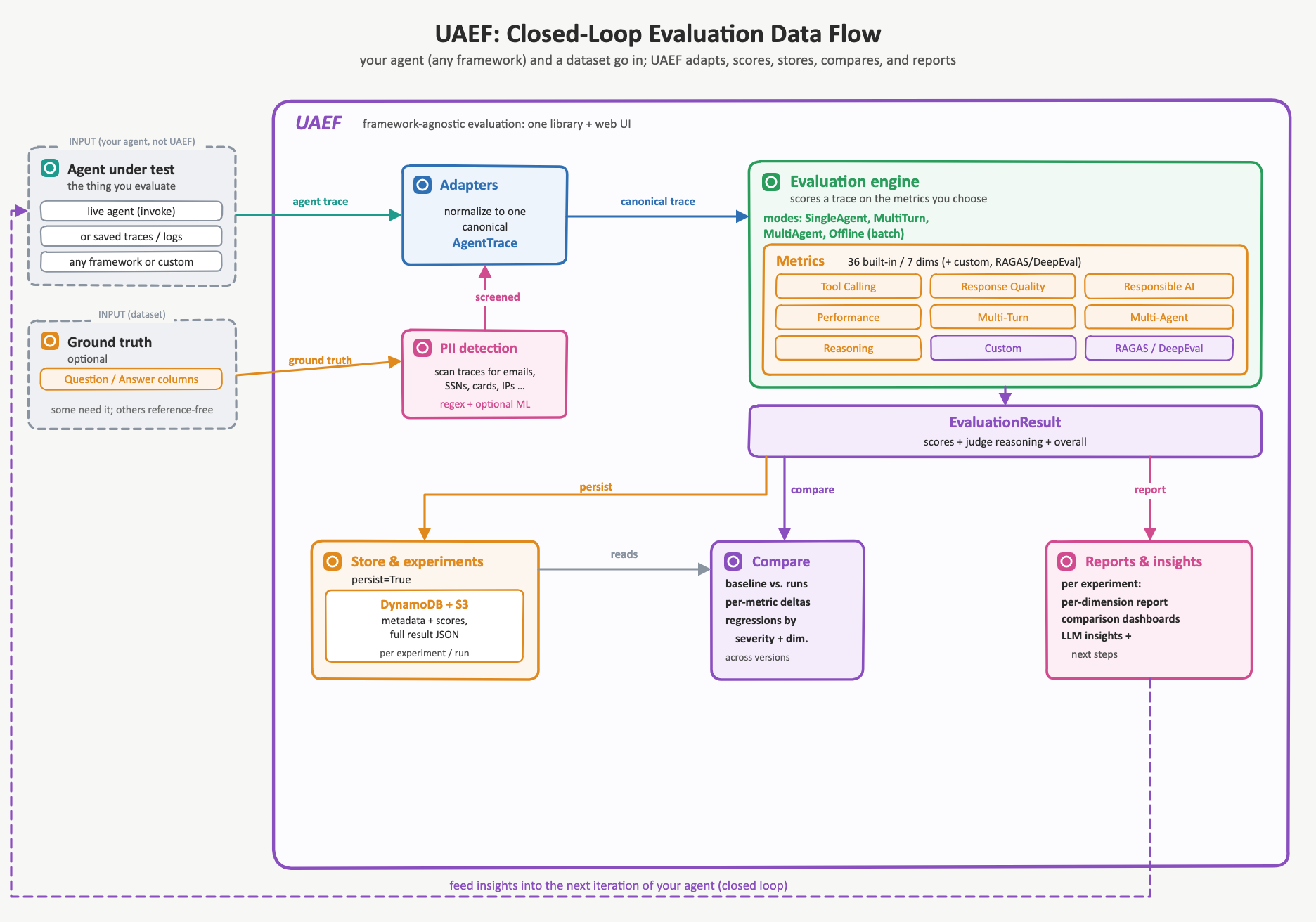
- 5Universal Agent Evaluation Framework simplifies AI agent testing
The Universal Agent Evaluation Framework (UAEF) provides a standardized system for testing AI agents regardless of the underlying development framework. By normalizing execution data into a common format, it allows teams to consistently measure performance and identify regressions across different agent versions.
- 6Anthropic reveals multi-chip strategy and compute efficiency methods in IPO roadshow
Anthropic has launched its IPO roadshow, providing new details on its technical infrastructure and business operations. The company highlighted its ability to run AI models across diverse hardware and its focus on proprietary efficiency techniques to maximize computing power.
- 7Anthropic sets IPO valuation target as major tech firms commit $26 billion
Anthropic has filed for an initial public offering with a proposed valuation of up to $1.4 trillion, though strong investor interest may push the final price higher. The company plans to list on the Nasdaq under the ticker symbol ANT, with the deal expected to price on November 18.
- 8Google DeepMind introduces AlphaGenome 2
Google DeepMind has unveiled AlphaGenome 2, an AI model designed to help scientists understand how specific cell changes drive disease. The model focuses on analyzing individual cells to investigate how single-letter DNA variations impact health.
- 9AI21 Labs and Deel collaborate to post-train NVIDIA Nemotron 3.5 Super
AI21 Labs and Deel have partnered to post-train NVIDIA's Nemotron 3.5 Super model for global payroll applications.
- 10Plurai raises $13 million to improve AI agent reliability using simulation technology
Startup Plurai has secured $13 million in seed funding to enhance the reliability of AI agents by applying simulation techniques originally developed for autonomous vehicle technology. The company aims to address the current performance limitations of AI agents in complex corporate environments by creating digital twins of internal systems to train models on edge cases.









Loaded 10 items