Foundation Models vs. Task-Specific Training in Medical Imaging
Heat
38%
Derived from the original story's reach and how many outlets independently reported the same event. On-site views and likes are excluded.
Impact
58%
Computed from the content type, how well-known the entities involved are, how many industries it touches, and whether it carries concrete anchors (model names, figures, dates), scaled by AI relevance. It measures how much this story matters to the AI industry — not writing quality, not popularity.
Source
Research
The tier of the outlet that published this story (official / newswire / mainstream / tech media / research / forum / social), maintained by human review. Describes the outlet itself, not a score for this particular story.
Reports
How many outlets reported this same event, confirmed through our provenance review (including the outlet that published this piece, so it is never below 1). Not a reprint count.
Only 1 source
38%Heat0Comments
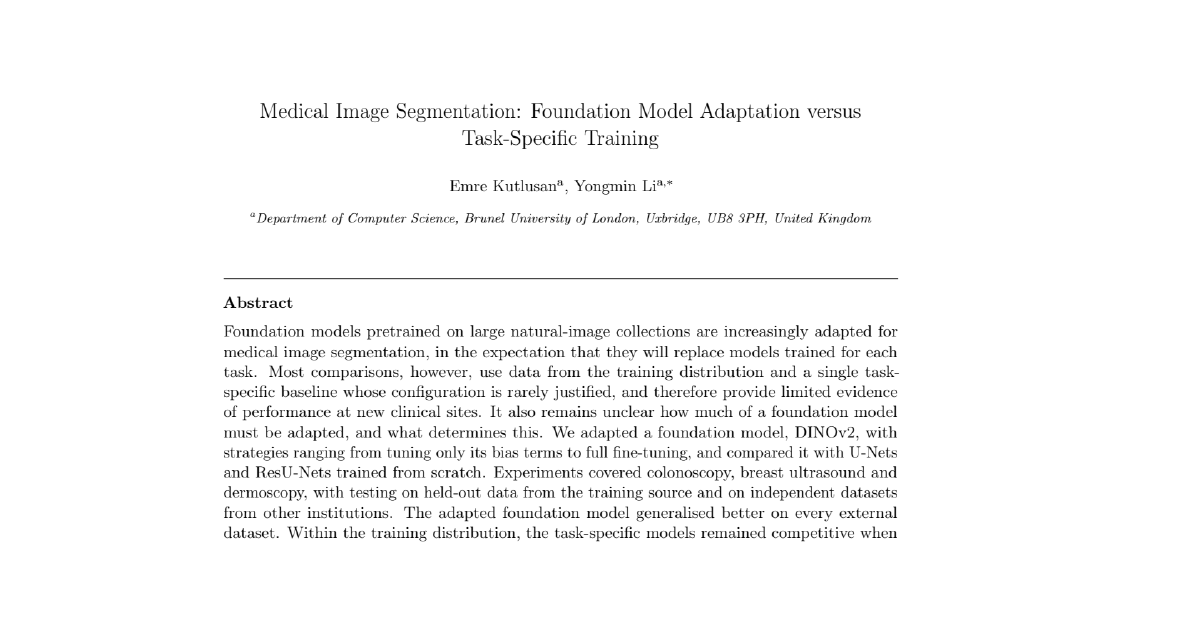
Researchers have evaluated how foundation models like DINOv2 perform in medical image segmentation compared to traditional task-specific models. While foundation models show superior generalization across different clinical institutions, they struggle with precision on small lesions compared to models trained from scratch on abundant data.
This story was rewritten with AI assistance using only captured and verified information. Consult the original source for definitive details.
Reader discussion
Reader discussion 0
Comments reflect reader views; source evidence and the three scores remain independent.